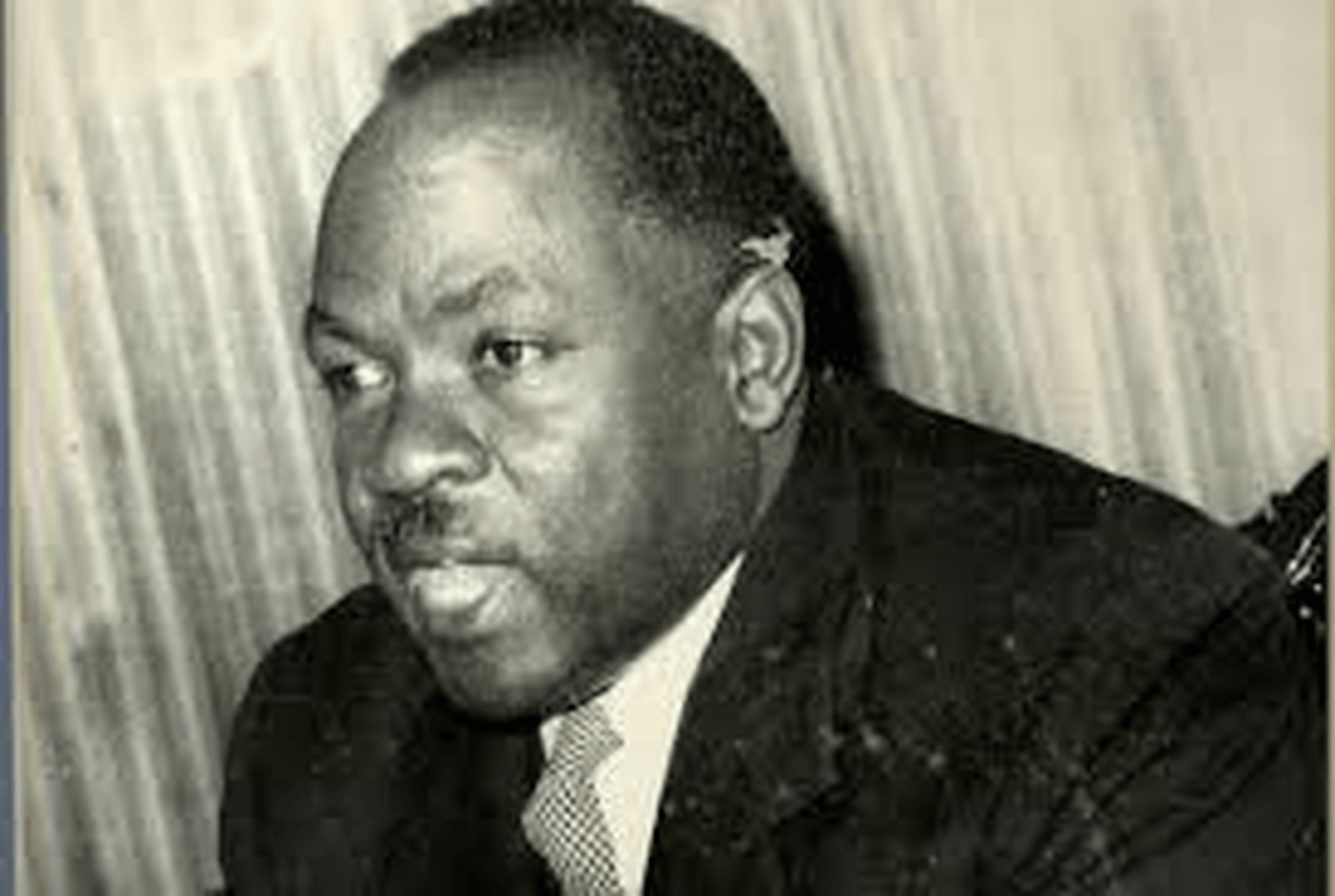
Idi Amin faced Benedicto Kiwanuka and pulled a pistol from around his waist. “Don’t you think I can kill you?” Amin asked. Kiwanuka, with no fear in his eyes, replied “You can but I’m not going to say anything at all. I will die with the truth”. Then Amin pulled the trigger.
This is how it was narrated by Daniel Mulemezi, a police detective who tried to investigate the disappearance of Benedicto Kiwanuka. Mulemezi said this for the first time in October 1988, as a witness to the Commission of Inquiry which was investigating the Violation of Human Rights in Uganda between 1962 and 1986.
Mulemezi told the commission that this information was from a trusted source—an intelligence officer in the Uganda Army. His name was Odwori Okoth. According to Okoth, Amin is the one who took the shot that ended the life of Ben Kiwanuka, a man he, himself had appointed as chief justice the previous year.
What truth did Benedicto die for?
If there was any good blood between Benedicto Kiwanuka and Amin, it never lasted that long. Amin freed all political prisoners when he became president. Benedicto Kiwanuka was among the Beneficiaries. Kiwanuka along with other detainees, as a sign of gratitude, organized a huge rally at Nakivubo Stadium to show support to the president, Idi Amin. Benedicto went ahead to try to convince the Organization of African Unity to recognize Amin as a president. He wrote to them and told them that Amin had the support of the Ugandans.
He became an advisor to the president and was appointed as the Chief Judge, a position he reluctantly accepted, according to his wife, Maxencia in an interview with Drum Magazine in 1980. She added that Benedicto only accepted this role after persuasion from his colleagues who insisted that he was the only one with the qualifications to be in that position.
She went ahead to indicate that Kiwanuka and Amin were never really “friends”. Why? Benedicto Kiwanuka’s popularity. It was not received well by Amin. Benedicto Kiwanuka was getting very popular and in some cases even commanded more respect than the president. Amin and his people started seeing Kiwanuka as a potential political opponent and started plotting ways of dealing with him.
As a chief Justice, Benedicto was a man who stood for the truth. He courageously spoke against the extrajudicial Killings by the regime—which obviously angered the regime and created tension between him and the executive arm.
Benedicto’s last days started with the arrest of Daniel Stewart, a British businessman who had been detained on the orders of Idi Amin. The British High Commissioner reached out to the Judiciary but no judge wanted to take on this case. They feared it. The commissioner then reached out to the Chief Justice, Ben, who agreed to take on the case against the advice of some of his colleagues. Kiwanuka went ahead and released Daniel Stewart, and wrote to the military that they had no business arresting a civilian. He asked them to stop interfering with the work of the judiciary.
The threats to end his life started almost immediately after this. He started receiving late night calls threatening him. One notable call was from Amin himself. Amin said “Who is greater? The president or the Chief Justice? Why did you say that we do not have the authority to arrest the British?” Benedicto Kiwanuka tried to explain to the president but Amin hang up before the explanation was complete.
You’d expect that the next move Kiwanuka should have taken after this call was to reach for his passport, run to the British Council and ask to be allowed into Britain. No. That wasn’t him. He was anything but timid. According to his wife Maxencia Zalwango, Kiwanuka was the type that could not run away. He was a man of exceptional courage and he was immune to any threat. “You could say he was a kind of Spartan when it came to anybody trying to challenge or deflect him from what he considered to be a moral duty.” She said. “He would rather die”
She recalled her husband saying “Sooner or later somebody has to die for a noble cause in this wicked world. If Amin kills me, somebody will take my place. But nobody will do unless someone sets an example first. We can’t afford other people to undertake a moral challenge when we can ourselves. If I die I will have played my moral part,”
A few days after the phone call from Amin, on the 2ost of September 1972, Ben called Paul Kawanga Ssemwogerere who was his close friend to meet him in his office. As narrated by Ssemwogerere to the judiciary insider magazine, Ben was clearing his desk when Ssemwogerere walked in. Ben said that he was no longer the chief justice and that he sensed that something bad was about to happen. Ben handed over a briefcase with his land titles to Ssemwogerere. He instructed that they are given to his wife in case something happened to him. The following day, September 22 at 8:15 am, Kiwanuka was forced into a car by a gang of men and driven away at top speed. He was never seen again.
The government released a statement, saying that they had nothing to do with the disappearance of Benedicto Kiwanuka and that they suspected that he had been kidnapped by some guerillas who had been seen around his chambers on that day.
Some of Mulemezi’s sources reported that Benedicto could have saved his own life if he had made a public statement, as directed by Amin, that he had been abducted by guerilla rebels. Benedicto refused to do this. He stood for the truth.
 Ugandan History.