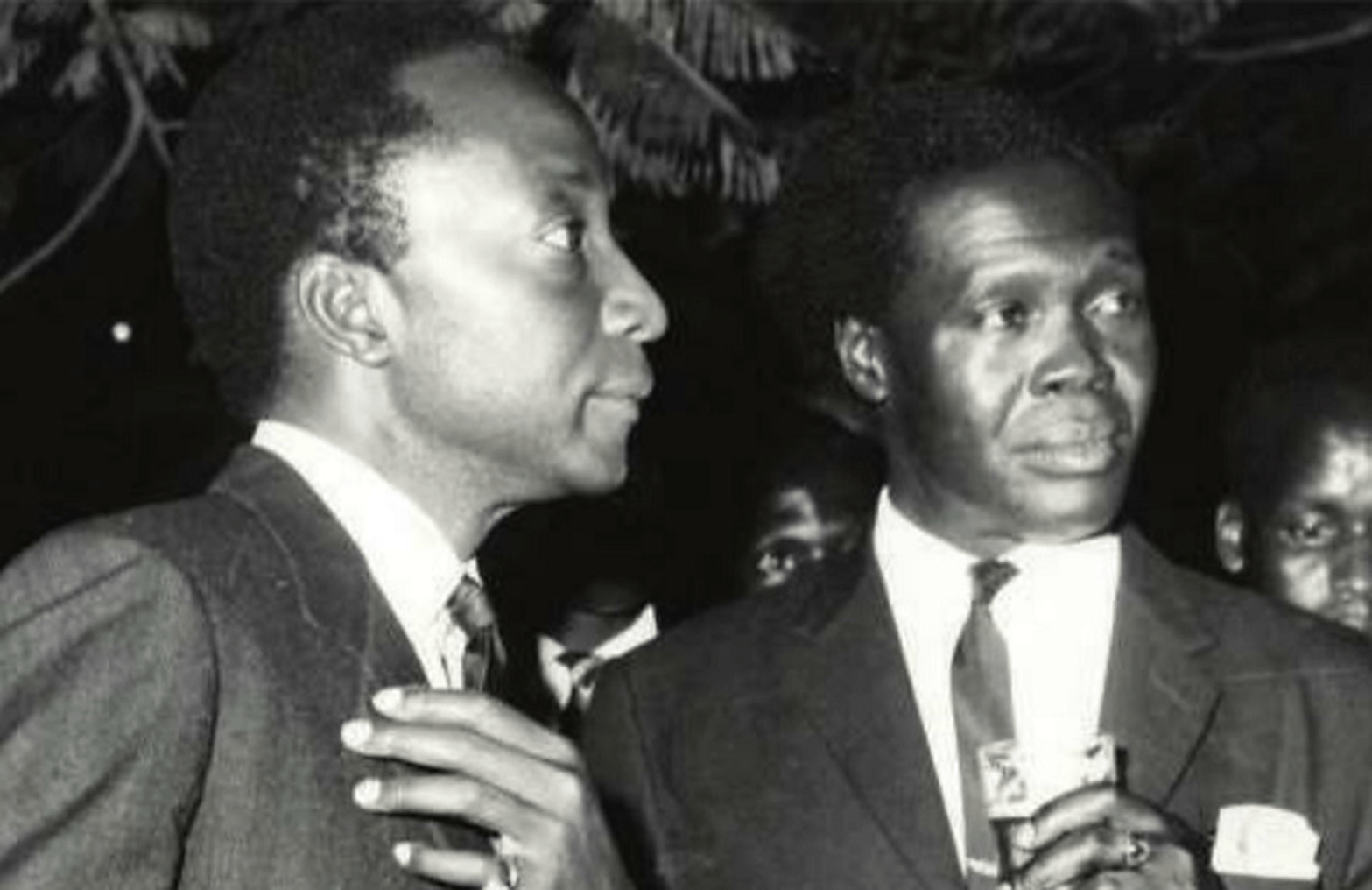
Prior to independence, the strongest political parties were the Democratic Party and the Uganda People’s congress. Immediately before the 1962 elections the Baganda hurriedly formed the Kabaka Yekka Party in order to advance Mengo’s political interests.
Kabaka Yekka would later form a coalition with Uganda People’s Congress to win Uganda’s first election. Milton Obote, the leader of the UPC became the Prime Minister and a year later nominated Kabaka Muteesa II as president, a largely ceremonial position at that time.
However, this collaboration between the Kabaka of Buganda and Milton Obote did not last long. In 1964, Obote Championed a parliamentary bill that led to the loss of the two counties Buyaga and Bugangayizi from Buganda back to Bunyoro. The relationship between Buganda and the central Government soured. Obote became paranoid with Buganda and ordered the army to react with maximum force to anything he perceived as a gesture of opposition from the Baganda.
Tensions kept rising between Mengo and UPC. Obote was becoming more and more dictatorial amidst all these pressures. Buganda was making demands after demands—one of which was to let Buganda become independent from Uganda. This is probably what made Obote lose his cool. In February of 1966, Obote suspended the prevailing constitution. In March the same year, he sacked the President and the Vice President and assumed all powers of the presidency.
In April, surrounded by troops in a parliamentary sitting, a new constitution which had not been seen prior—or even debated on by Parliament was adopted. This came to be known as the pigeon hall constitution because copies of it were just placed in the pigeon halls of the MPs for them to pick up and read.
Buganda kept pressing hard. In May 1966, Buganda asked the central government to vacate the “Buganda soil”. It is also speculated by Obote loyalists, that during this time, the Kabaka was collecting arms to fight against the central government. In an interview with the weekly observer, the late Godfrey Binaisa, who was the Attorney General during this time, claimed that: “It all started when Obote sent his police to find out about weapons that had been brought by the Kabaka into the palace. The Kabaka had his own personal guns– but these were guns for fighting; he wanted to throw out Obote. He wanted to become the real president because he was almost ceremonial. That is when Obote realised that he (Kabaka) wanted to take his seat.
This was the tipping point. On May 24th 1966, Obote ordered his army, under the command of Idi Amin to attack the Palace of the Kabaka. Thousands were killed. The Kabaka was able to escape and find his way to Britain, where he would die 3 years later, in 1969 under unclear circumstances. The following year, 1967, Obote imposed a new constitution where he abolished all kingdoms and made himself president without an election.
 Ugandan History.